The Stadium Is the New Front Row
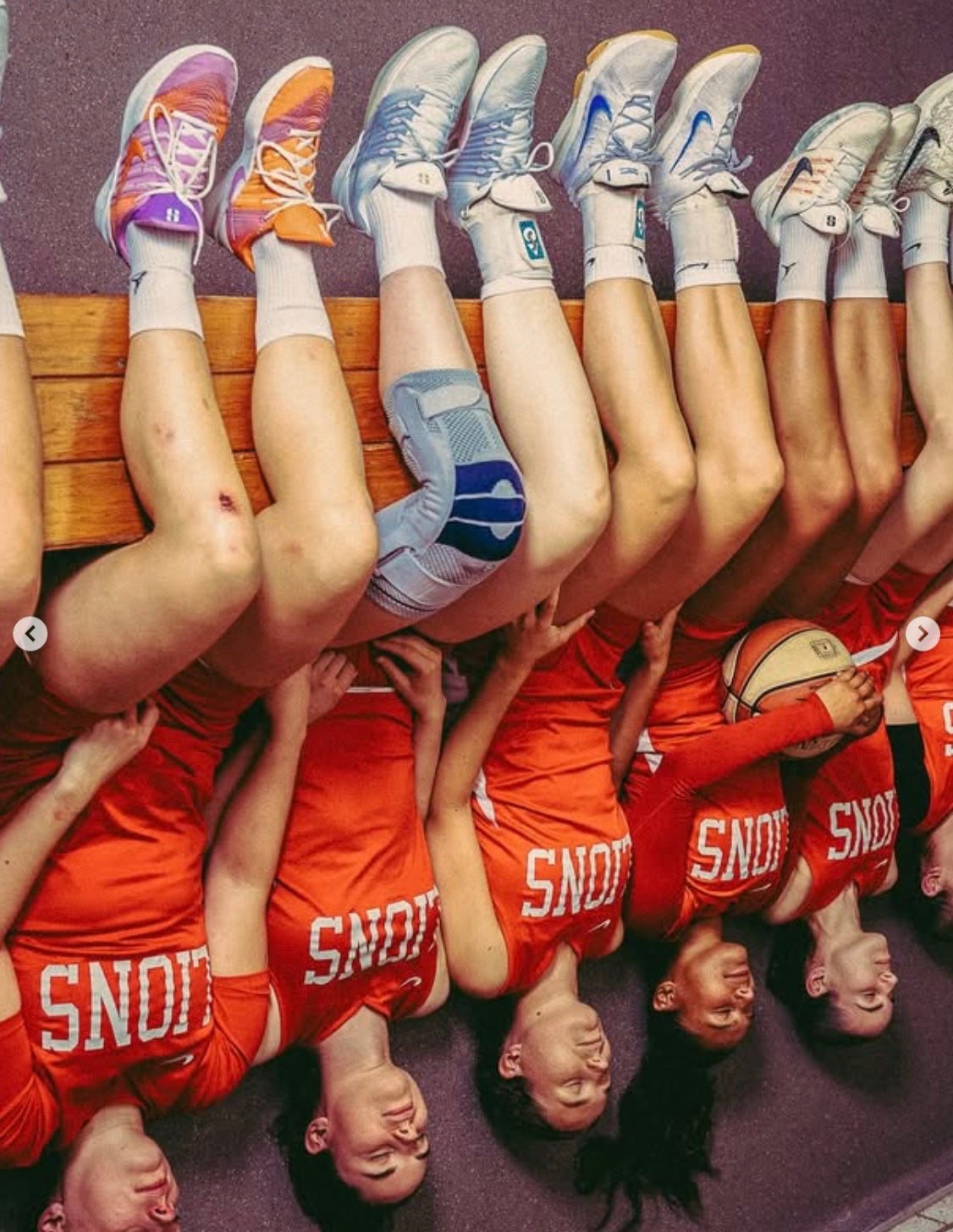
Fashion spent years borrowing from sport. Now it has taken a seat courtside.
Twenty years ago, a woman in a football jersey was likely to be assumed to be wearing her boyfriend’s. Today, the jersey is the outfit.
It can be oversized over a skirt, tucked into tailored trousers, worn with heels, loafers or sneakers. It can be vintage, customised, borrowed or bought new. What was once treated primarily as a uniform of allegiance has become part of a much wider visual language.
For decades, fashion borrowed from sport. Now something else is happening: fashion has moved into the stands.
When I go to a basketball game, I want to wear my team’s colours. I also want to dress like myself. Looking around the stands, I’m clearly not the only one.
The jersey has become both a declaration of support and an object of personal style.
From Jordan to Rodman
Long before courtside became a front row, Michael Jordan had already shown how far basketball could travel beyond the court.
Jordan became a global cultural icon in an analogue age. There was no social media, no direct relationship between athlete and audience, no endless stream of images travelling around the world in real time. And yet his image became instantly recognisable far beyond basketball: the Bulls jersey, the shaved head, the gold hoop, the oversized suits — and, above all, the shoes.
Air Jordan was central to that transformation. It turned an athlete’s name into something people could wear, collect and identify with. Jordan helped move basketball beyond sport and into fashion, advertising and popular culture on a truly global scale.

And then came Dennis Rodman.
If Jordan turned the athlete into a global lifestyle figure, Rodman blew apart the idea of what that figure could look like.
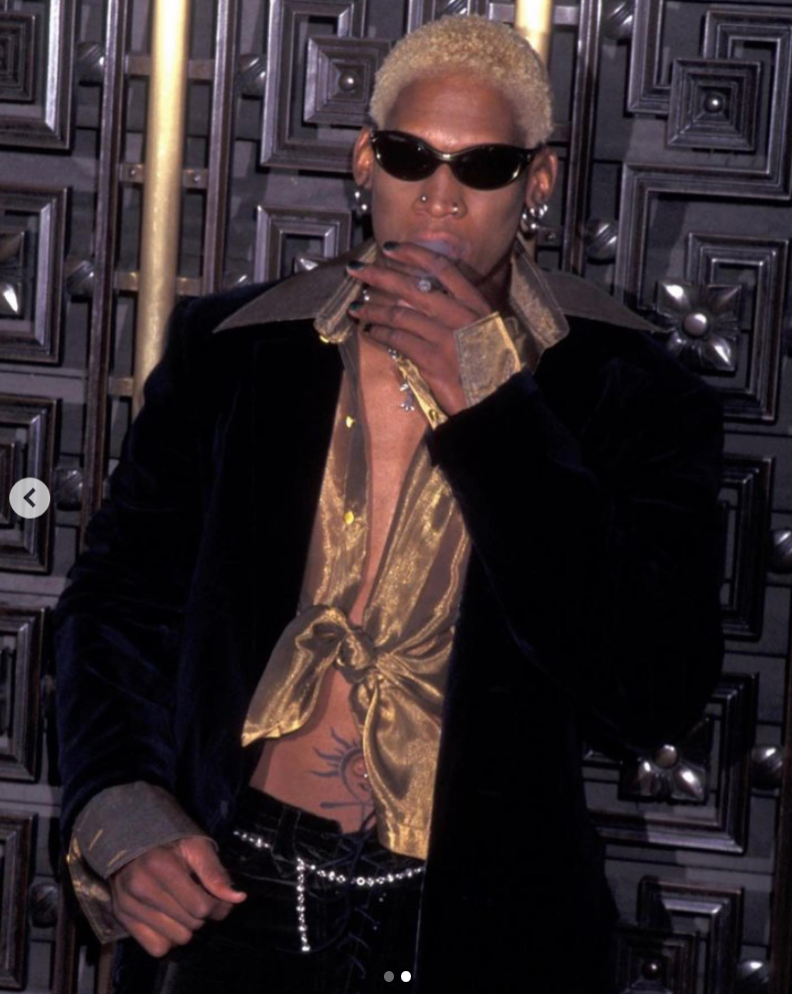
His constantly changing hair became part of his visual language — extreme cuts and colours transformed into patterns, symbols and messages. Piercings, painted nails, make-up, skirts: Rodman treated his own image with the freedom and instinct of a fashion icon, at a time when very few male athletes did.
His visual language belonged to the same cultural moment in which Jean Paul Gaultier was challenging gender through fashion. Decades later, Rodman’s influence feels remarkably current. What once looked radical inside professional sport now looks completely at home in contemporary fashion.
Jordan transformed the scale of the athlete as cultural icon. Rodman transformed what that icon could look like.


When the Jersey Left the Stadium
Basketball’s relationship with fashion was largely driven by its players. Football took a different route. Much of its current fashion energy came from the stands.
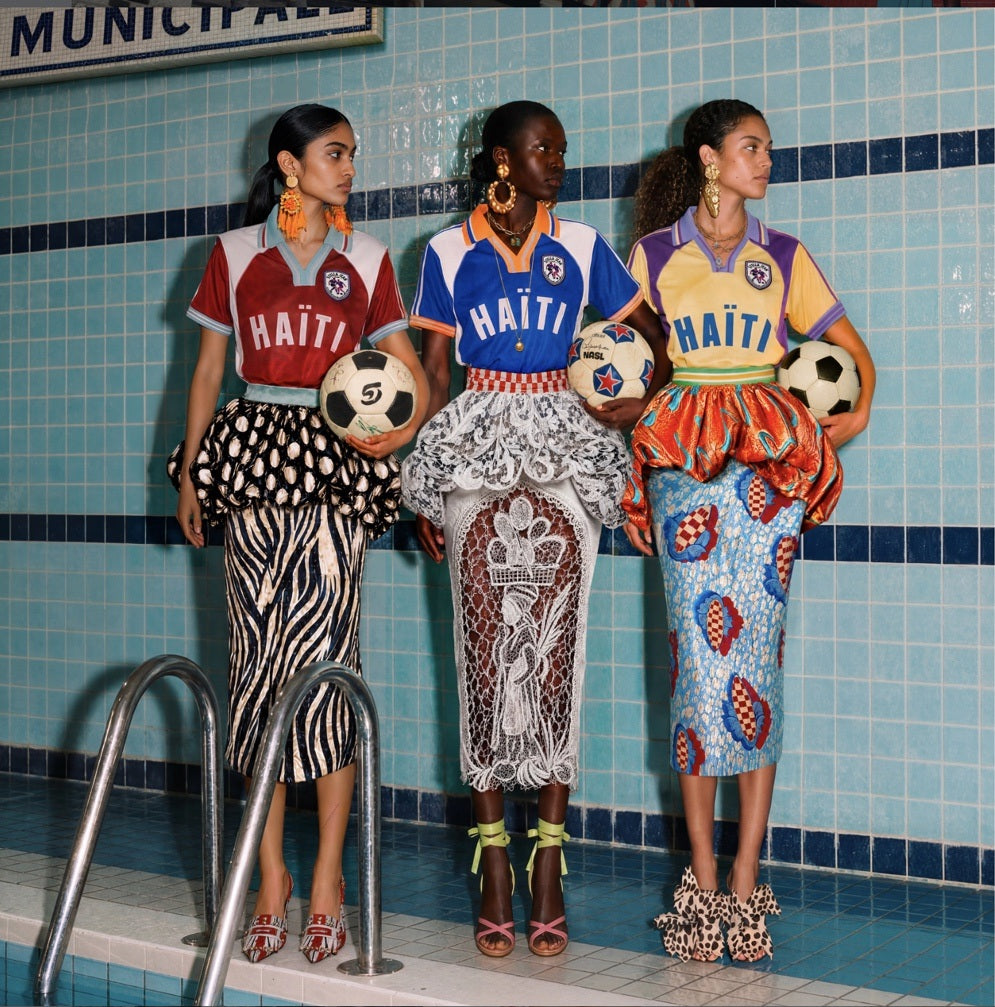
Football shirts have moved in and out of streetwear for decades, but their latest return feels different. The jersey is no longer simply worn with jeans on match day. It has become something to style.
“Blokecore” gave the internet a name for something fashion had already absorbed. Designers and brands had been pulling from football culture for years, while supporters had always created their own visual codes around teams, cities and belonging.
What changed was who felt entitled to play with those codes.
Women have been central to that shift — not simply wearing the jersey, but changing the visual language around it. A football shirt can now sit inside a wardrobe without requiring the rest of the outfit to become sportswear.
And this is where sport becomes particularly interesting to me. Clothing can say this is my team and this is me at exactly the same time.
Fashion doesn’t erase support. It gives it another language.

Then Came the Knicks
With the New York Knicks, the relationship between basketball and fashion now goes beyond what people wear to the game. It has entered the structure of the team itself.
In 2022, Kith founder Ronnie Fieg became the Knicks’ first Creative Director, working across uniforms, courts and the team’s wider visual identity.
And then there is courtside.
Madison Square Garden has always had its celebrities, but Spike Lee is something different. He has been expressing his Knicks fandom through clothes for decades, turning orange and blue into a visual language of his own. Fashion isn’t something he added when basketball became fashionable. It has always been part of the way he supports his team.
Timothée Chalamet represents another generation of the same idea. A Knicks fan since childhood, the jerseys and caps he grew up wearing have evolved into custom Chrome Hearts in Knicks orange and blue.
And the fashion doesn’t have to be luxury. Taylor Swift and the Haim sisters arrived in homemade pun T-shirts — Stevie Knicks, Knickeback, Knickole Kidman. At the other end of the spectrum, A$AP Rocky wore orange satin Saint Laurent.
Courtside has become part of the spectacle. The game creates the emotion; the people around it increasingly shape the image.
The photograph of Chalamet and Lee high-fiving captures it perfectly: two generations, two completely different personal styles, reacting to exactly the same thing.
Fashion and fandom aren’t competing for authenticity here.
A homemade T-shirt, a custom Chrome Hearts look and Spike Lee dressed in orange and blue can sit at the same game and say essentially the same thing:
I belong here, but I’m going to look like myself while I do it.
When I go to a basketball game, that’s exactly what I want too. I want the colours, the team, the ritual. I just don’t want to stop dressing like myself in order to participate.

The Stadium Is Changing
This shift is no longer just an American phenomenon.
Across Europe, the relationship between sport, fashion and fandom has been evolving for some time. In cities such as Paris, Milan and Madrid, football and basketball already move easily through fashion, music and street culture. Jerseys have travelled from the stands to designer collections and back again, while the crowd itself has become more visually diverse.
But the shift doesn’t happen at the same speed everywhere. In Greece and Serbia, where basketball culture has traditionally been more closely tied to hardcore ultra culture, some traditional fans are more resistant to that expansion. There is still an instinct to distinguish between the “real fan” and the person who has supposedly arrived for the culture around the game.
But those categories are becoming increasingly difficult to separate.
Someone can care about the clothes and care desperately about the score. A woman can style a vintage jersey beautifully and know exactly what is happening on the court. A child can come because the atmosphere feels exciting and become a supporter for life.
The aesthetic experience does not cancel the emotional one.
For women, that expansion is especially visible. The old visual codes of fandom were overwhelmingly male. Women are no longer simply entering those spaces; they are making room for their own way of looking, dressing and expressing fandom inside them.
And when the game is on the line, most of those distinctions collapse. The lifelong supporter, the woman in the perfectly styled vintage shirt, the child at their first game and the celebrity courtside all want the same thing:
Their team to win.
Fashion hasn’t made sport less serious. It has made the culture around it bigger.
The stadium is still about the game. It just has a much bigger front row now.
